

AW26 Launch: What Changed and Why
Nae Vegan ShoesEvery autumn we put a collection into the world, and most years the changes are the kind only we notice: a last adjusted, a lining improved, a colour dropped. Norte is the first collection in a while where we changed several things at once — and on purpose. Here's what moved, and the thinking behind it.
We led with the design this time
For most of our eighteen years, the argument came first. A customer would find us because they were looking for vegan shoes, and the shoes had to be good enough to justify the search. That's a reasonable way to build a brand, and it built ours.
But it has a ceiling, and we've come to think it also has a flaw. A shoe bought mainly out of principle is a shoe that sits in the wardrobe or is worn a few times without enthusiasm. And a pair that doesn't get worn is the least sustainable object in the house, whatever it's made of.
So the brief for Norte started somewhere else: make shoes people want on looks alone, and let the ethics be what they find when they turn the shoe over. Sculptural, considered, and desirable. That reordering is the biggest change of the season, and everything below follows from it.
The shapes went back to the classics
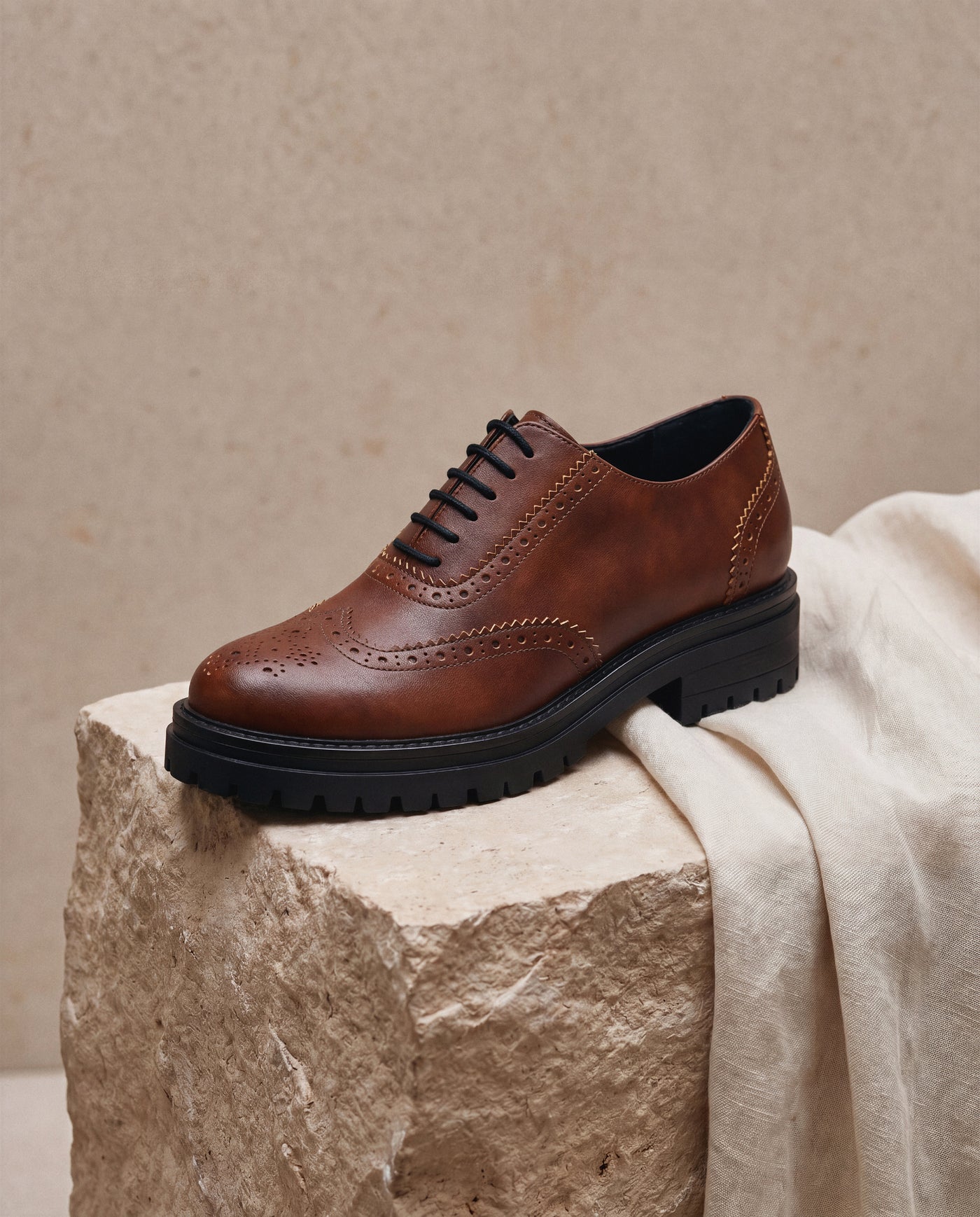
The last few seasons leaned heavily on sneakers, as most of the industry did. Norte turns towards shapes with longer memories: GRACE, a brogue with Oxford lacing; penny loafers for women and men in BRENDA and LEVI; Chelsea boots; and knee-high boots substantial enough that we've given them a category of their own — BETIA and RUBY.
The reasoning is not only that the trend moved, though it has. It's that a classic silhouette is the most durable design decision available to us. A shape that has survived eighty years is unlikely to look wrong in five, and we would rather sell you something you keep than something you replace. Designing for longevity means designing shapes that don't date.
The same instinct explains the two new winter clogs, KOOD and MEDAN. We introduced the shape last season, watched how people wore it, and built on it rather than moving on to something else. Not every season needs a new idea; some of them need a better version of the last one.
A new material — and why we put it on belts first
Norte introduces cactus leather to the range: seven belts made from Desserto®, a material grown in Mexico from the nopal cactus. It's the first genuinely new material we've adopted in several seasons, and the thing that convinced us wasn't the marketing. It was the harvest: only the mature pads are cut, the plant is left standing, and it grows them back — the same plants, over and over, on land that needs no irrigation.
People have asked why we started with belts rather than shoes. The honest answer is that we followed the evidence. Independent testing has found cactus leather to be well suited to leather goods, with a slightly higher rigidity than the calfskin it replaces — excellent for a belt, less ideal underfoot. So that's where we've put it — made up in the same workshop in Jaén that makes the rest of our belts. A new material, in hands that already knew what they were doing. If it proves itself, it moves further.
We've written separately about what cactus leather actually is, limits included — because it isn't plastic-free, and we'd rather say so than let you find out.
Cactus joins the palette rather than replacing it. Apple leather, certified microfibre, cork, pineapple fibre and recycled rubber are not news — they have been in our shoes for years, and they carry on through this season too. We add slowly, and we keep what works.

A new way of walking
The other new arrival is a category rather than a material. AYA is our first barefoot sneaker: a wide toe box, a zero-drop sole, and nothing under the foot pretending to correct it. Barefoot footwear has been growing for years, and most of it looks like equipment. We wanted a pair that looks like a normal, good-looking shoe and happens to let your foot work the way it's built to.

Alongside it, MACKAY takes the sneaker in the opposite direction — slimmer, retro, made partly from recycled material, and closer to a shoe than a trainer. Between the two, we think the everyday end of the collection is covered.
The part you never see
Not everything worth talking about is new. Some of what makes a shoe good is simply what we keep doing, season after season, because it works — and it tends to be the part nobody photographs. None of what follows changed this year. That is rather the point.
Our linings are a technical microfibre developed by a specialist in La Rioja, engineered around moisture rather than insulation: it absorbs, then releases it again by evaporation, so the foot stays dry. Dry feet are warm feet, and a lining that manages sweat does more for comfort than any amount of extra padding.
The same logic runs under the foot. Those winter clogs are lined with plush organic cotton, sit on a natural cork insole, and are set on soles made from the rubber of recycled car tyres — about as direct an answer as we have found to the question of what to do with the rubber the world has already produced. It is also, incidentally, an excellent sole: tyre rubber is engineered to survive things a pavement will never do to it.
None of that shows in a photograph. It shows on the fourth hour of a cold day, which is when a shoe is really judged — and it is the reason we are slow to change suppliers once something works. There's more on the materials themselves on our materials page.
And what changed behind the scenes
The collection wasn't the only thing we worked on this year. We published our first Work Ethics and Responsible Sourcing report, covering how we treat our own team, how we work with the partners who make our products, and — the part most brands leave out — what our oversight still doesn't cover.
Norte is available now. If you'd like the detail rather than the overview, we've written up the boots and the shoes of the season separately.
